Springs of Digital Disruption: Mediation of Blockchain Technology Adoption in Retail Supply Chain Management
Authors
First/Principal/Corresponding author
Journal / Publication
Journal of Electronic Marketing and Retailing
Inderscience Publisher

Where Ancient Wisdom Meets Global Innovation
Founded in 1916, BHU stands as one of Asia's largest residential universities, fostering world-class research and academic excellence. Experience a vibrant campus culture rooted in the timeless heritage of Varanasi.
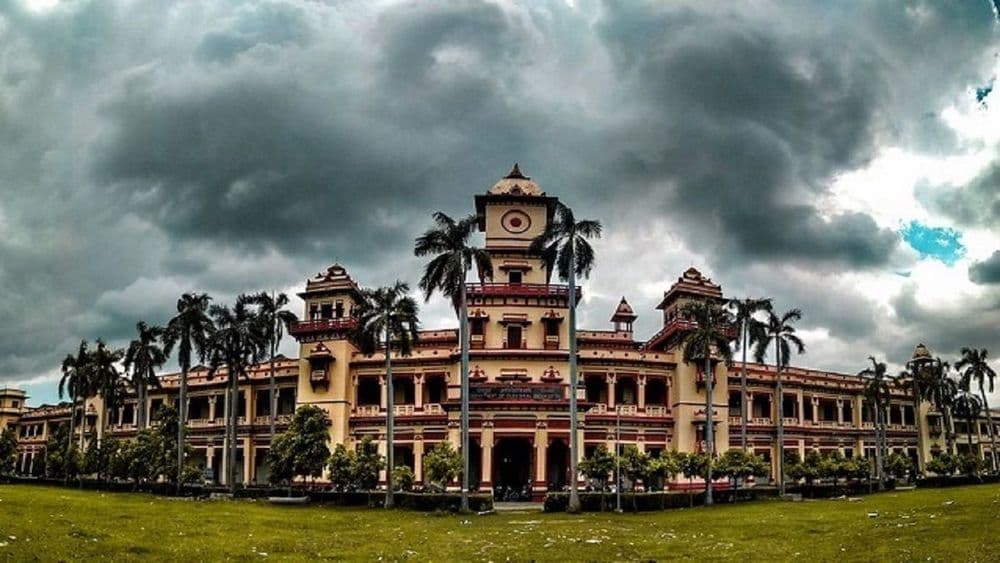
Banaras Hindu University (BHU) is one of India’s premier Central Universities and an internationally renowned centre of learning, located in the historic city of Varanasi. Founded in 1916 by Pandit Madan Mohan Malviya with the support of eminent personalities such as Dr. Annie Besant, the University was established under the B.H.U. Act, 1915.
Spread across a vast and green 1,300-acre main campus and a 2,700-acre campus at Barkachha, Mirzapur, BHU offers education and research across a wide spectrum of disciplines, including humanities, social sciences, sciences, technology, medicine, fine arts and performing arts.
The University comprises 6 Institutes, 14 Faculties, 144 Departments, interdisciplinary centres, constituent colleges and schools, along with numerous advanced research and specialized centres. Its rich ecosystem includes Bharat Kala Bhavan, a renowned museum, and Sir Sunderlal Hospital, a modern teaching hospital.
With a vibrant community of students, faculty and staff from across India and around the world, BHU has made significant contributions to the freedom movement, nation-building, education, science, technology, arts and culture. True to its vision, the University continues to promote knowledge, innovation, intellectual excellence and global integration.
Banaras Hindu University is, in many ways, a universe in microcosm where knowledge, culture, tradition and innovation come together.

Institute
Faculty
Department
Hostel
Authors
First/Principal/Corresponding author
Journal / Publication
Journal of Electronic Marketing and Retailing
Inderscience Publisher
Authors
First/Principal/Corresponding author
Journal / Publication
International Journal of Service Science, Management, Engineering, and Technology
IGI Global Publisher
Authors
First/Principal/Corresponding author
Journal / Publication
Journal of Statistical Computation and Simulation
Taylor & Francis
Authors
Garima Kumari, Dr. Nagendra Kumar
Journal / Publication
SHIKSHA SHODH MANTHAN
ADDHYAYAN MANTRA EDUCATIONAL SOCIETY, ETAWA
Authors
First/Principal/Corresponding author
Journal / Publication
Journal of Agribusiness in Developing and Emerging Economies
Emerald Group Publishing Limited, UK
Authors
Pandey N, Singh SK
Journal / Publication
Microbes and Infection
Elsevier
Authors
Bharadwaj U, Singh SK
Journal / Publication
Cellular Signalling
Elsevier
Authors
Rohit
Journal / Publication
Indian Journal of Information Sources and Services
The Research Publication
Authors
Ahmad F, Keshri V, Singh SK.
Journal / Publication
International Journal of Biological Macromolecules
Elsevier
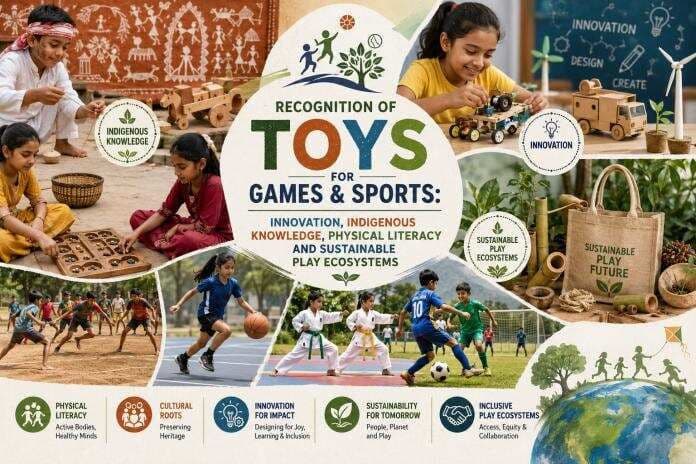
The three-day National Conference ‘KREEDA: Knowledge, Recognition & Enhancement through Educational Design and Activity’ was commenced by the Department of Physical Education. The Conference is centred around the theme “Recognition of Toys for Games & Sports: Innovation, Indigenous Knowledge, Physical Literacy and Sustainable Play Ecosystems”. Addressing the inaugural function, Vice-Chancellor Prof. Ajit Kumar Chaturvedi emphasised that toys should not be viewed as trivial objects. He described the toy market as a serious business and highlighted the need for greater attention to popularity, ingenuity, innovation, ease of use and inclusivity in toy design. Prof. Chaturvedi noted that toys and games should not be restricted to children and pointed to their potential for older adults as well, particularly through word games, sedentary games and activities that encourage mental agility, learning and social interaction. The Vice-Chancellor also highlighted the need for research into suitable materials for toy production, including wood, plastic, aluminium and newer engineering materials, while keeping affordability and ease of fabrication in mind. He observed that traditional methods of producing wooden toys can be time-consuming and therefore stressed the importance of developing manufacturing and fabrication processes that can support production at scale. He also referred to the potential of educational toys in areas such as science, engineering and mathematics and encouraged participants to engage actively in the conference sessions through questions and discussions. Guest of Honour Padma Shri Dr Rajnikant, known for his work in promoting Geographical Indication (GI) products and supporting traditional artisans, spoke about the importance of protecting and documenting India’s community-based knowledge and traditional products. He highlighted examples of GI-linked cultural products and discussed the importance of documenting traditional toys and crafts. Dr Rajnikant emphasised that traditional toys represent more than material objects, as they are connected with India’s cultural traditions, knowledge systems and practices of learning through play. He encouraged universities and academic departments to undertake research on GI toys, educational toys and traditional games, while working closely with artisans and industry. Prof. Sushma Ghildiyal, Dean, Faculty of Arts, said that the playful instinct is inherent to human development but may gradually diminish during childhood, making it important to rejuvenate play activities and toys that remain connected with cultural roots and traditions. She highlighted the emphasis placed by the National Education Policy (NEP) 2020 on activity-based learning and gamification in school education. She stressed the responsibility of teacher education to incorporate ‘Toy Pedagogy’, particularly at the foundational and primary stages of education. Prof. B.C. Kapri, Organising Secretary, described toys as an important repository of learning for children, rooted in India’s culture and traditions. He emphasised that play is a natural instinct and that toys give it a practical and educational form. Citing a simple toy involving throwing and catching a ball, he explained that such activities can develop hand-eye coordination and decision-making skills. He highlighted the diversity of traditional games across India and said that KREEDA seeks to explore their relationship with education, culture and Indian knowledge traditions. The academic programme featured a distinguished panel of keynote speakers including Dr. Vineeta Siddharth, President, KREEDA for Reviving Traditional Games, Chennai; Dr. Shailendra Jaiswal, Advisor, Toy Association of India and Founder, Srijan Sanchar; Mr. Atitendra Jaiswal, CEO, Srijan Sanchar; Prof. Shanti Swarup Sinha; Prof. Manish Arora, Faculty of Visual Arts, BHU; Ms. Bhavya Agrawal, Guest Faculty, Department of Applied Arts, Faculty of Visual Arts, BHU; and Dr. Sachin Tiwari, Assistant Professor, Department of Ancient Indian History and Archaeology, BHU The conference includes paper & poster presentations, demonstrations of toys and traditional games, workshops and lectures, providing a platform for academic exchange as well as interaction between researchers, educators, designers, practitioners and traditional knowledge holders. As part of the concluding proceedings, Organising Secretary Dr. Binayak Kumar Dubey launched his book “Kreeda Design Activity Handbook”, co-authored with Dr. Deepak Kumar Dogra and Mr. Dheeraj Tiwari. The conference is being organised in collaboration with the Department of Applied Arts, Faculty of Visual Arts, BHU; Arogya Shiksha Foundation; Krida Bharti Varanasi; TAPESIA Varanasi; The Toy Association of India; and Srijan Sanchar. Over the decades, BHU has developed into a multidisciplinary institution encompassing education, research, innovation, healthcare, agriculture, technology, humanities, social sciences, performing arts, and numerous other fields of knowledge. Its academic environment encourages students and scholars to pursue excellence, creativity, critical thinking, and meaningful research. The University's heritage is deeply connected with the vision of Mahamana Malaviya, who believed that education should contribute not only to individual development but also to the service and progress of society and the nation. This vision continues to inspire the University's academic and institutional journey. Located in the culturally rich city of Varanasi, BHU provides a distinctive environment where knowledge, tradition, culture, and contemporary learning coexist. Its historic campus, academic institutions, libraries, laboratories, healthcare facilities, residential infrastructure, and vibrant student life contribute to a comprehensive university experience. With a distinguished community of teachers, researchers, students, alumni, and staff, BHU continues to contribute to the advancement of knowledge and to the educational, scientific, cultural, and social development of the country. The legacy of BHU is not only its history—it is a continuing commitment to knowledge, innovation, character, service, and excellence.
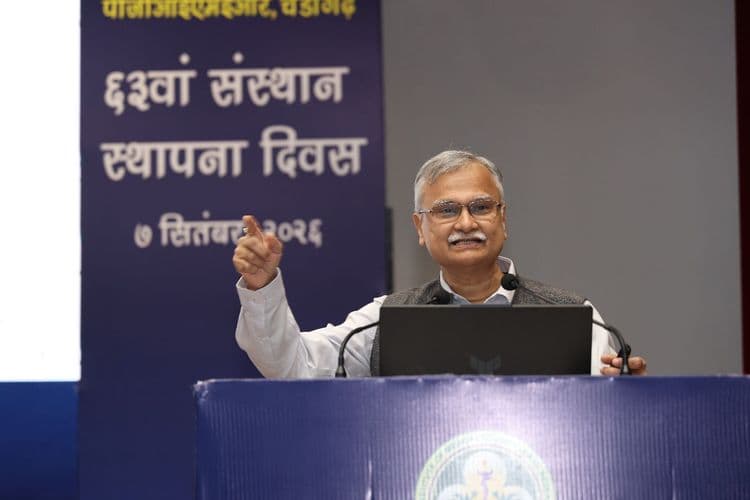
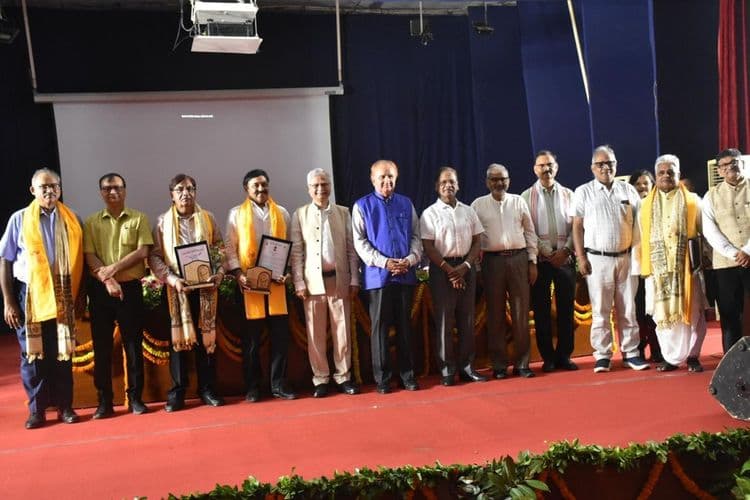
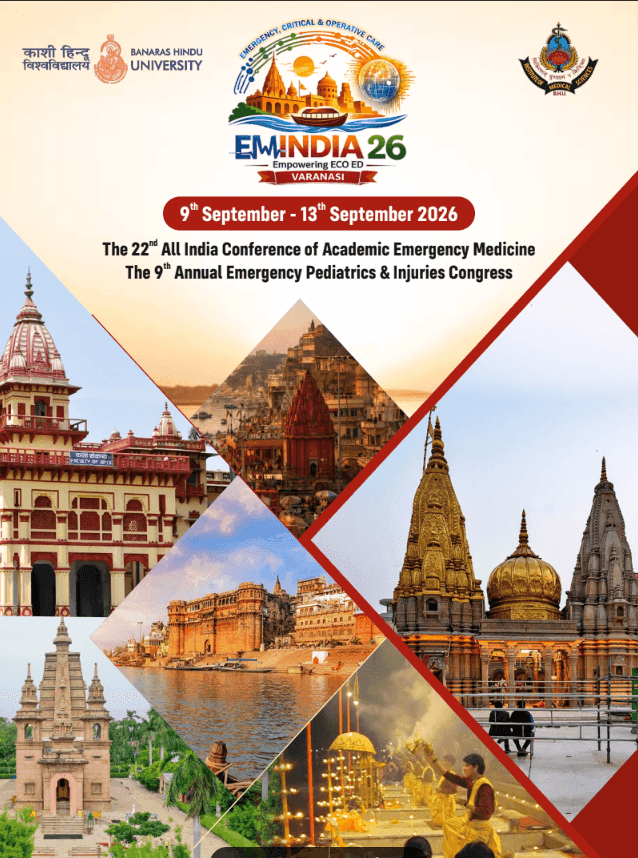
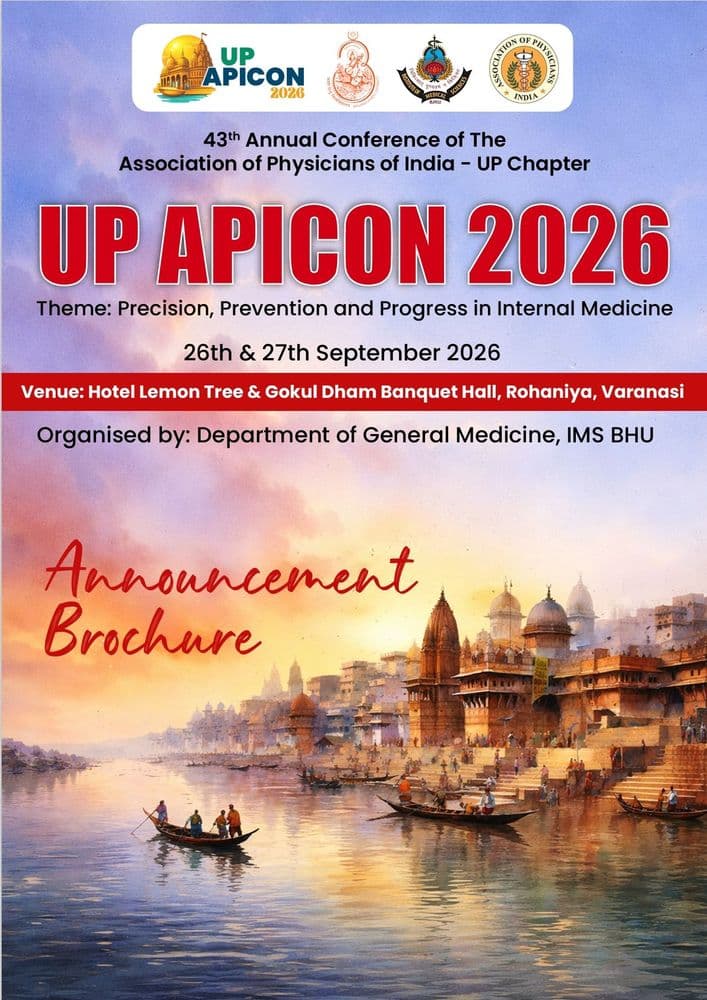
The Institute of Medical Sciences is hosting EMINDIA 2026, the 22nd All India Conference of Academic Emergency Medicine, from September 9 to 13. The theme of the conference is “Strengthening ECO Services,” representing Emergency, Critical Care and Operative Services. The formal inaugural ceremony took place at K. N. Udupa Auditorium. During the occasion, certificates were presented to the awardees of the Academic College of Emergency Experts (ACEE) Fellowship. Dr Sanjeev Bhoi, Director, WHO CCET, briefed the audience about the fellowship. Certificates were distributed for fellowships in Emergency Medicine, Emergency Pediatrics and Critical Injury Care. Ashwamedh certificates (Ashwamedh is a faculty development programme by EMINDIA) were also presented to recipients. Dr Sagar Galwankar read the pledge for the recipients. He also announced the names of recipients of various INDUSEM awards like Jan Suraksha Paritoshik, Samajik Abhiyantrik Samman, Shiksha Samruddhi Samman, and Saksham Chhatra Paritoshik. Prof. Sanjay Gupta, Dean, Faculty of Medicine, was also awarded the Swasthya Niti Samman for his policy and administrative skillset. Vice-Chancellor Prof. Ajit Kumar Chaturvedi, who graced the occasion as the Chief Guest, in his address, said that if we get more people in each profession who can think more about the profession and less about their personal journeys, the profession shall grow, and in turn all of us shall grow. He congratulated both Dr Krishna Kumar and Dr Sagar for investing tremendously in Emergency Medicine in India. He also remarked that even though India's needs are different, if more and more people who have seen and practiced in the developed world invest their time and energy in terms of helping India chart our journey, it will be very beneficial for our society and country. Prof. S. N. Sankhwar, Organising Chairperson and Director, IMS-BHU, said in his welcome address that Emergency Medicine is not simply a specialty, it is the front door of the healthcare system. He said he would like EM India 2026 to become a meeting of ideas, experience and action. He encouraged young doctors, residents, and students to participate actively, ask questions, challenge conventional thinking, share your innovation, learn from the experiences, and, most importantly, take something from the conference can be implemented when they return to their institutions. Guest of Honour Prof. Sagar Galwankar, Chief Academic Director, Academic College of Emergency Experts, and Professor of Emergency Medicine, University of Florida, USA, said that the recognising system in India recognises only a handful of doctors. Therefore, INDUSEM decided to recognise hundreds of doctors in India across disciplines. He announced certificates for distinguished recipients. Guest of Honour Prof. Krishan Kumar, President-Elect, AAPI, USA, in his address, highlighted the significant contribution of Indian-origin physicians to healthcare in the United States. He expressed pride in serving as API’s 46th President and praised INDUSEM and Prof. Galwankar for their two decades of work in establishing academic emergency medicine in India, including building associations, examinations, curricula, faculty development programmes, research, digital training, conferences and a PubMed-indexed journal. Drawing on his four decades of experience in emergency medicine, including 30 years in pediatric emergency medicine, he emphasised the importance of strong knowledge and skills in the specialty and pledged API India’s full support for the academic, political and leadership development of emergency medicine in India. Prof. Sanjay Gupta, Co-organising Chairperson and Dean, Faculty of Medicine, praised the association’s remarkable organisation, passion and commitment, particularly its practice of delegates bearing their own travel expenses and avoiding hotel stays. He also congratulated the fellows on clearing a challenging examination and receiving their fellowship certificates, and encouraged participants to experience the culture and heritage of Banaras Hindu University during their visit. Prof. Puneet, Co-organising Chairperson and Medical Superintendant, Sir Sundarlal Hospital, said that in Emergency Medicine, every minute matters. Therefore, quick response from the team is important. He expressed hope that the next two-day deliberation will bring consensus statements on various gaps which are present right now, so that the best healthcare can be provided in the country. The Vigyan Central Journal was also released on the occasion by the Vice-Chancellor and Dr Galwankar, who described it as India's own "Pubmed." The Organising Secretary, Prof. Bikram Gupta, IMS-BHU, proposed the Vote of Thanks. The main conference was held earlier on Friday, with the presence of Dr Praveen Agrawal, National CME and EPICON 2026, 9th Annual Emergency Paediatrics and Injuries Congress. The pre-conference programme had begun with a Skill Mela on September 9, followed by five specialised workshops on September 10, covering Mechanical Ventilation, Eye Emergencies, POCUS–Thoracic, POCUS-Guided Nerve Blocks and Obstetric Emergencies. The conference is being organised in association with ACEE, INDUSEM, EMA, AIIMS New Delhi and WACEM. Mahamana believed that true education should cultivate knowledge, character, discipline, service, and a sense of responsibility towards society and the nation. His vision brought together the strengths of modern scientific education with India's rich intellectual, cultural, and philosophical traditions. BHU continues to uphold these foundational ideals by fostering an academic environment that encourages intellectual curiosity, research, innovation, creativity, and social responsibility. Students and scholars are encouraged to develop not only professional expertise but also values that enable them to contribute meaningfully to society. The University's commitment to education, research, healthcare, cultural enrichment, community engagement, and national development reflects the continuing relevance of Mahamana's vision. His ideals remain an important part of BHU's identity as it responds to the changing needs of India and the wider world. Mahamana’s vision continues to inspire BHU to pursue excellence in knowledge while nurturing character, compassion, service, and a commitment to the greater good.
The National Institutional Ranking Framework (NIRF) was approved by the MHRD and launched by Honourable Minister of Human Resource Development on 29th September 2015. This framework outlines a methodology to rank institutions across the country. The methodology draws from the overall recommendations broad understanding arrived at by a Core Committee set up by MHRD, to identify the broad parameters for ranking various universities and institutions. The parameters broadly cover “Teaching, Learning and Resources,” “Research and Professional Practices,” “Graduation Outcomes,” “Outreach and Inclusivity,” and “Perception”.
The Swachh Bharat Mission-Grameen (SBM-G) represents a transformative phase in India's sanitation narrative, driven by a history enriched with ancient innovations and bolstered by contemporary governmental efforts. Initiated in 2014 by the Hon’ble Prime Minister, the mission targeted making India Open Defecation Free (ODF).
Digital India is a flagship programme of the Government of India, launched on July 1, 2015, by Honorable Prime Minister Shri Narendra Modi with the vision to transform India into a digitally empowered society and knowledge economy. Digital India has been improving the lives of all citizens through the digital delivery of services, expanding the digital economy and employment opportunities.
The objective behind the Portal is to provide a single window access to the information and services being provided by the Indian Government for citizens and other stakeholders.

BHU’s Atithi Guest House Management System strengthens digital governance through centralized booking, live room availability, automated allocation, occupancy tracking, searchable records, transparency, efficiency, and user-friendly administrative services.
No events scheduled
Select another date on the calendar to view scheduled activities.